
An autumn photographic study of architecture, materiality, and the relationship between art and landscape in Grand Rapids, Michigan.
At Frederik Meijer Gardens & Sculpture Park, architecture and sculpture are rarely experienced in isolation. A monumental steel structure rises from a meadow of autumn grasses. A copper Buddha rests among trees and stones. Within the Welcome Center, enormous marble faces become the walls of a room, while carefully positioned windows turn the surrounding landscape into a living composition.
Across the grounds, the distinction between the built and natural environments becomes increasingly difficult to define.
Located in Grand Rapids, Michigan, Frederik Meijer Gardens brings together contemporary sculpture, architecture, and cultivated landscapes in a setting where each discipline contributes to the experience of the others. Buildings frame views. Pathways establish perspective. Sculptures introduce contrasting materials, forms, and textures into an environment that changes continuously with the seasons.
Photographed during autumn, the grounds reveal a particularly compelling relationship between permanent works of art and the temporary character of the landscape. Weathered steel stands against golden grasses. Dense evergreens provide a backdrop for brightly painted sculpture. Stone, water, and architecture settle into compositions shaped as much by seasonal light as by their original design.
The photographs that follow examine these relationships through a series of architectural spaces, designed gardens, and works from the sculpture collection.
Architecture as an Experience of Art
The Welcome Center and Jaume Plensa’s Utopia
The architectural experience begins within the Welcome Center, designed by Tod Williams Billie Tsien Architects.
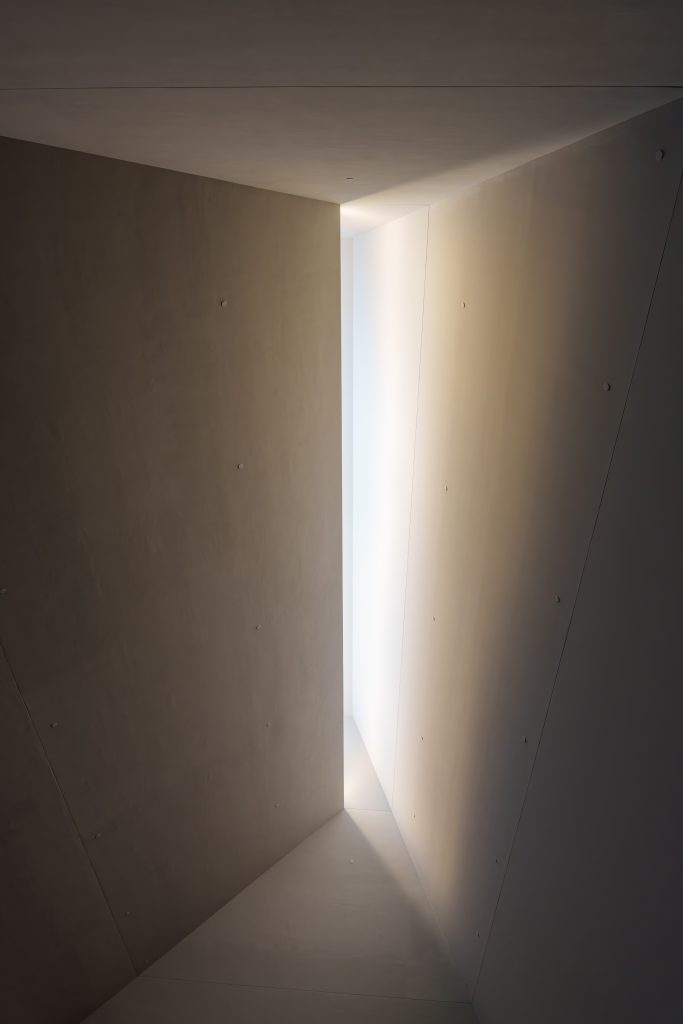
Rather than relying on dramatic exterior gestures alone, the building establishes its character through substantial materials, controlled natural light, and a careful sequence of interior spaces. Stone surfaces, deep openings, and restrained finishes provide a quiet setting for the art and horticulture that define the institution.
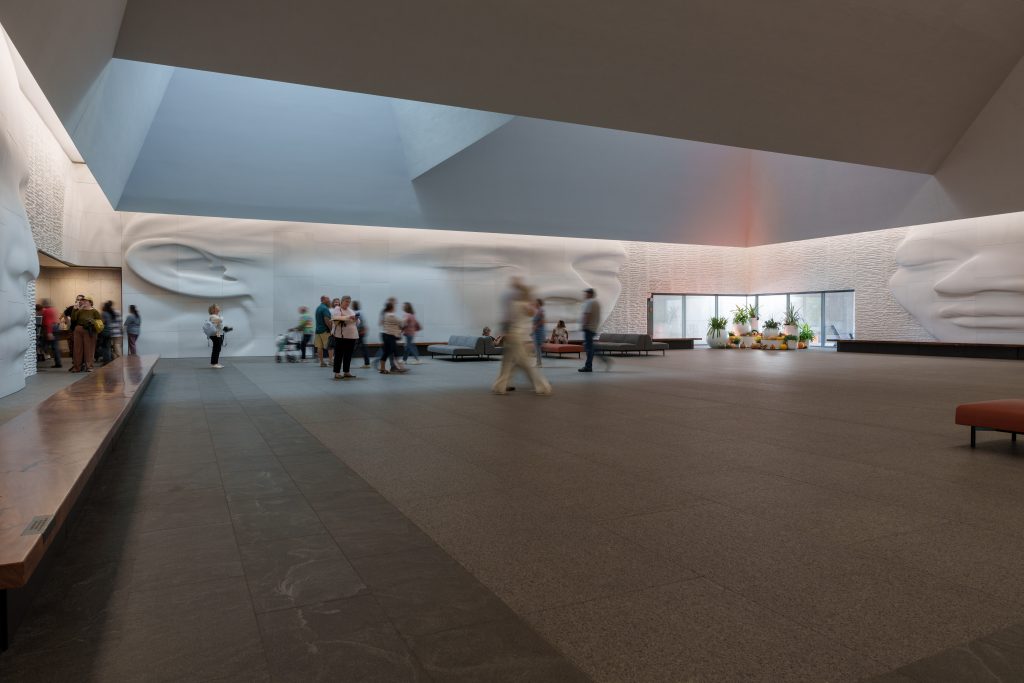
Nowhere is this relationship more apparent than in the Garden Pavilion, where Jaume Plensa’s monumental installation Utopia transforms the architecture into an immersive work of sculpture.
Completed as part of the Welcome Center project, Utopia consists of four enormous white-marble relief portraits depicting faces with closed eyes. The figures emerge gently from the walls, their features defined through subtle variations in depth, shadow, and surface.
Unlike a conventional sculpture displayed within a gallery, Utopia cannot be separated from the room that contains it. The walls are the artwork.
The scale is considerable. Each relief wall measures approximately 19 feet high and 86 feet long, surrounding visitors with imagery that feels both intimate and monumental. The closed eyes encourage a contemplative reading, while the movement of people through the space continually changes the relationship between the individual and the sculpted faces.
Above, large skylit openings introduce natural light into the pavilion. As daylight moves across the marble, shadows collect within the reliefs, revealing their contours and emphasizing the material’s remarkable ability to appear both solid and delicate.
The result is an architectural environment in which light, stone, and sculpture operate as a single composition.
Framing the Landscape from Within
Elsewhere in the Welcome Center, the architecture adopts a more restrained presence.
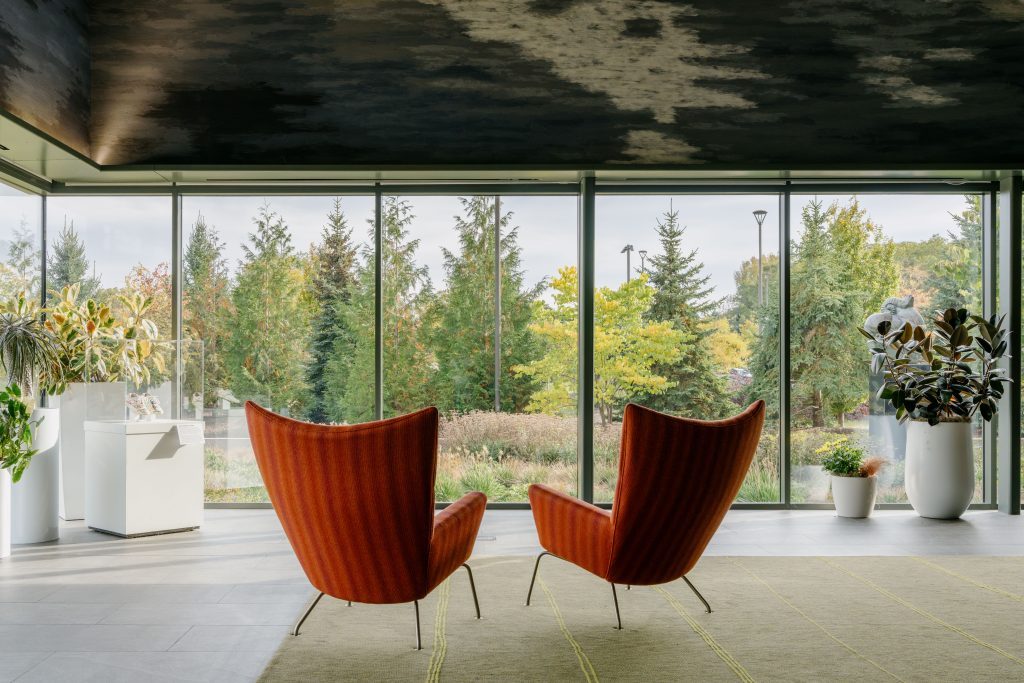
In a glass-walled lounge, two rust-colored chairs face a broad expanse of glazing overlooking the surrounding gardens. Their warm upholstery introduces a quiet note of color against the subdued interior palette.
The room’s composition is notably simple. Thin vertical window divisions establish a measured rhythm, while the dark ceiling creates a strong horizontal plane above the landscape. Beyond the glass, conifers and deciduous trees provide layers of green, yellow, and muted autumn color.
Here, the architecture functions almost as a photographic frame.
The landscape becomes the dominant visual element, while the building provides a controlled vantage point from which to observe it. The effect is especially apparent in autumn, when the contrast between the permanent interior and the changing vegetation becomes more pronounced.
Landscape as Architecture
The Richard & Helen DeVos Japanese Garden
The relationship between architecture and landscape takes a different form in the Richard & Helen DeVos Japanese Garden.
Designed by Hoichi Kurisu and opened in 2015, the approximately eight-acre garden brings together water, stone, vegetation, pathways, and traditional Japanese architectural elements.
Rather than organizing the landscape around a single commanding view, the design unfolds gradually.
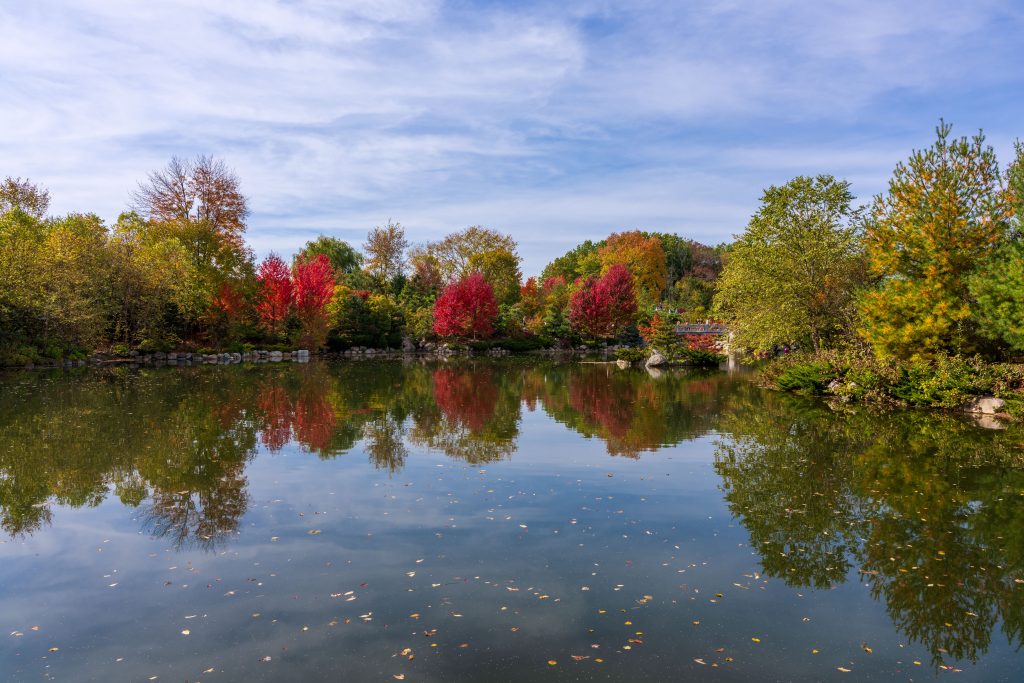
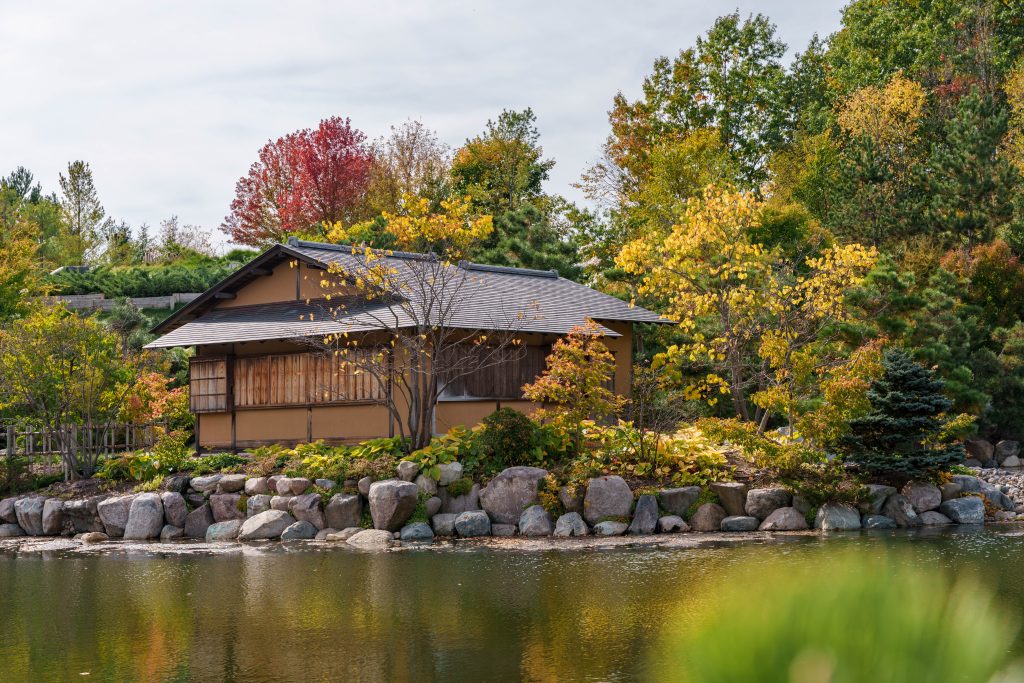
A pond reflects the surrounding trees. Carefully positioned boulders establish visual boundaries along the shoreline. Bridges and pathways guide visitors between areas of openness and enclosure, revealing new compositions as the viewing position changes.
In autumn, the garden’s carefully arranged vegetation becomes especially expressive. Red and gold foliage contrasts with dark evergreen branches, while the still water doubles the colors and shapes of the landscape.
The pond is not simply a decorative feature. Its reflective surface expands the perceived depth of the garden and introduces a second, inverted composition beneath the visible landscape.
The Japanese Teahouse
Set within this carefully arranged landscape is an authentic Japanese teahouse.
The structure was originally constructed in Japan by skilled craftspeople, then dismantled, transported, and reassembled at Meijer Gardens using traditional methods.
Its architecture is deliberately modest in comparison with the monumental contemporary sculptures found elsewhere on the grounds.
A low roofline, generous overhangs, and natural-looking exterior finishes allow the building to settle into its surroundings. Viewed across the pond, the teahouse appears as one element within a larger composition of water, stones, trees, and shoreline planting.
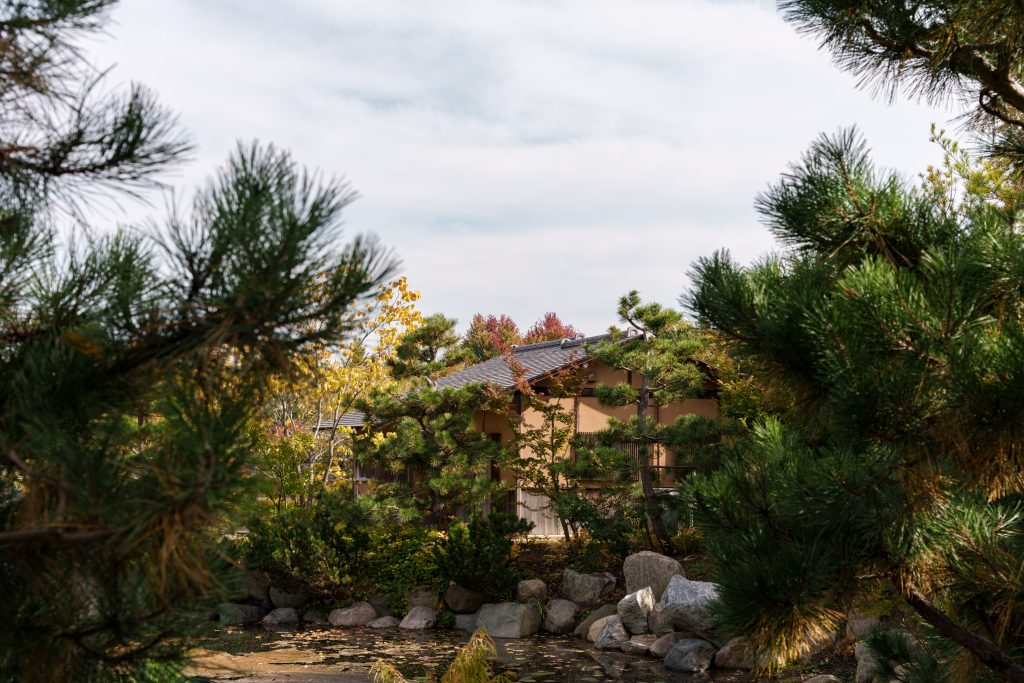
From another vantage point, pine branches partially conceal the structure, creating a more intimate and layered perspective.
These changing views illustrate an important quality of the garden’s design: architecture is not always presented as the immediate focal point. Instead, it is discovered through the landscape.
Sculpture in Conversation with Nature
Zhang Huan’s Long Island Buddha
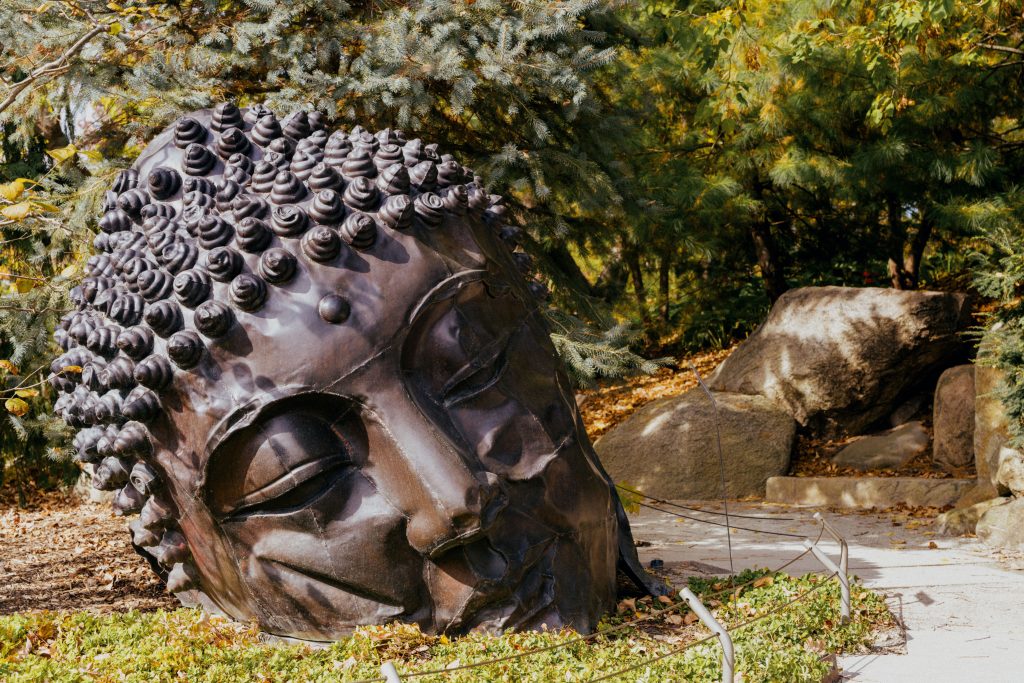
Within the Japanese Garden, Zhang Huan‘s Long Island Buddha introduces a more complex relationship between material, history, and setting.
Created in 2010–11, the copper sculpture depicts a large, fragmented Buddha head. Its surface is deliberately rough and irregular, recalling an archaeological remnant rather than a pristine religious monument.
The work reflects the artist’s encounter with damaged Buddhist sculptures in Tibet and the historical destruction of cultural artifacts.
Surrounded by trees, rocks, and planted ground, the sculpture appears almost absorbed into the garden. Its copper surface carries a visual weight that complements the surrounding natural materials, while its fractured form introduces a sense of age and vulnerability.
The placement encourages quiet observation, but the sculpture’s damaged appearance complicates the serenity of its surroundings.
Industrial Materials, Monumental Scale
Ai Weiwei’s Iron Tree
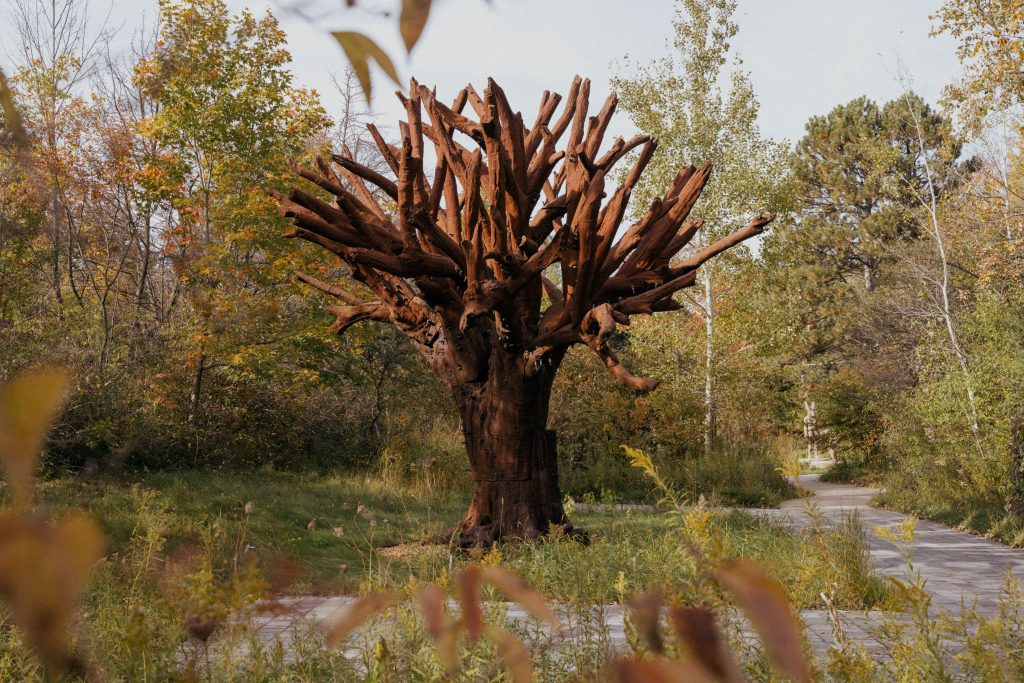
Ai Weiwei’s Iron Tree approaches the relationship between nature and fabrication from another direction.
Constructed from 99 cast elements derived from trees in southern China, the monumental sculpture brings together separate branches and trunk sections into a single artificial organism.
The work, completed in 2013, is made from iron and stainless steel.
Its branching silhouette is immediately recognizable as a tree, yet its construction reveals a deliberate contradiction. The form imitates natural growth, while its material and assembly remain unmistakably industrial.
Among the living trees of the Sculpture Park, this contrast becomes especially apparent.
The surrounding vegetation changes color, loses leaves, and responds to the seasons. The sculpture retains its rigid structure, presenting an image of nature reconstructed through casting and assembly.
Alexander Liberman’s Aria
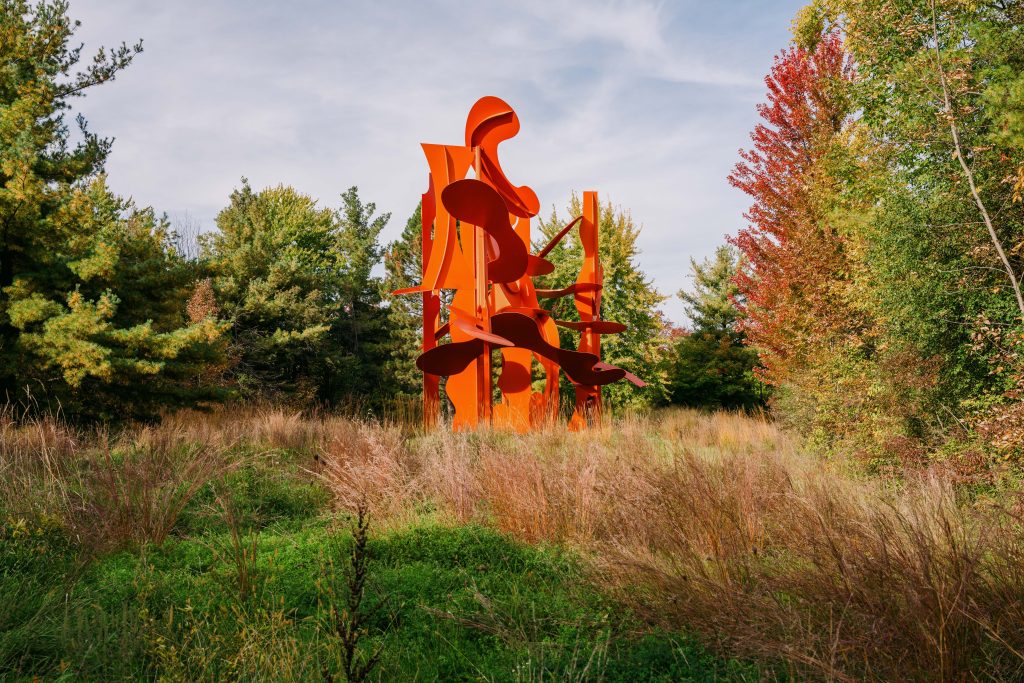
Alexander Liberman‘s Aria introduces an entirely different visual language.
Standing approximately 42 feet tall, the sculpture is constructed from painted steel in a vivid cadmium-red hue that reads as orange-red in the autumn light.
Curving planes, vertical supports, and projecting elements form an energetic composition that suggests movement without abandoning the weight and rigidity of industrial material.
The sculpture’s title references music, and its arrangement of intersecting forms can be read as a visual interpretation of rhythm and movement.
Placed within a meadow, Aria becomes a striking contrast to its surroundings.
Its saturated color separates it from the greens, golds, and muted browns of the landscape. Tall grasses partially obscure its lower structure, while surrounding trees provide a textured backdrop against which its geometric forms become more pronounced.
Mark di Suvero’s Scarlatti
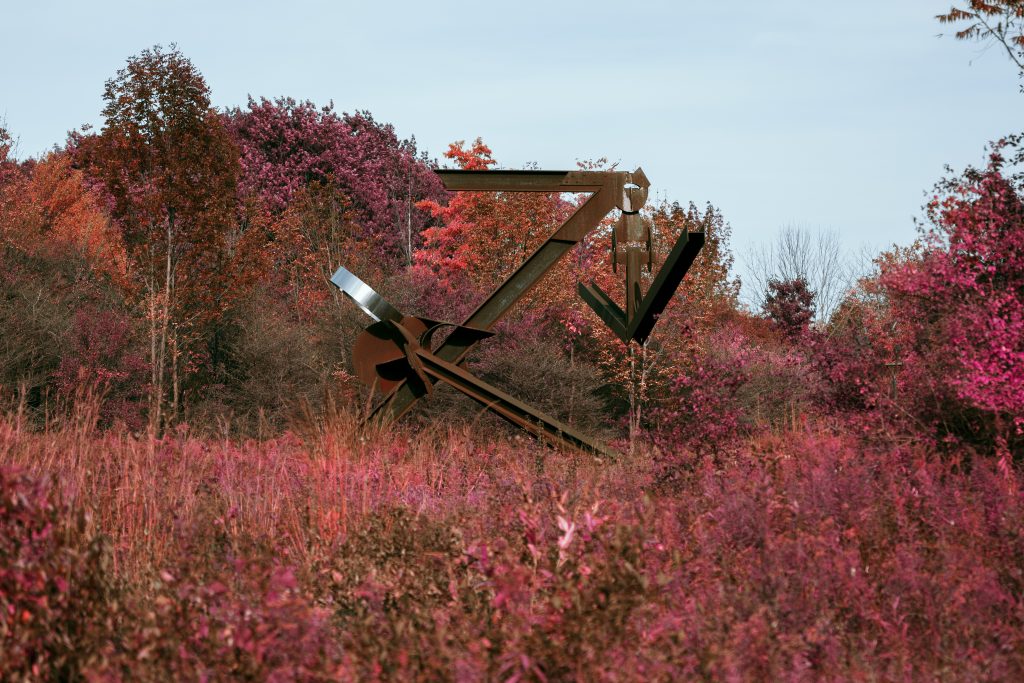
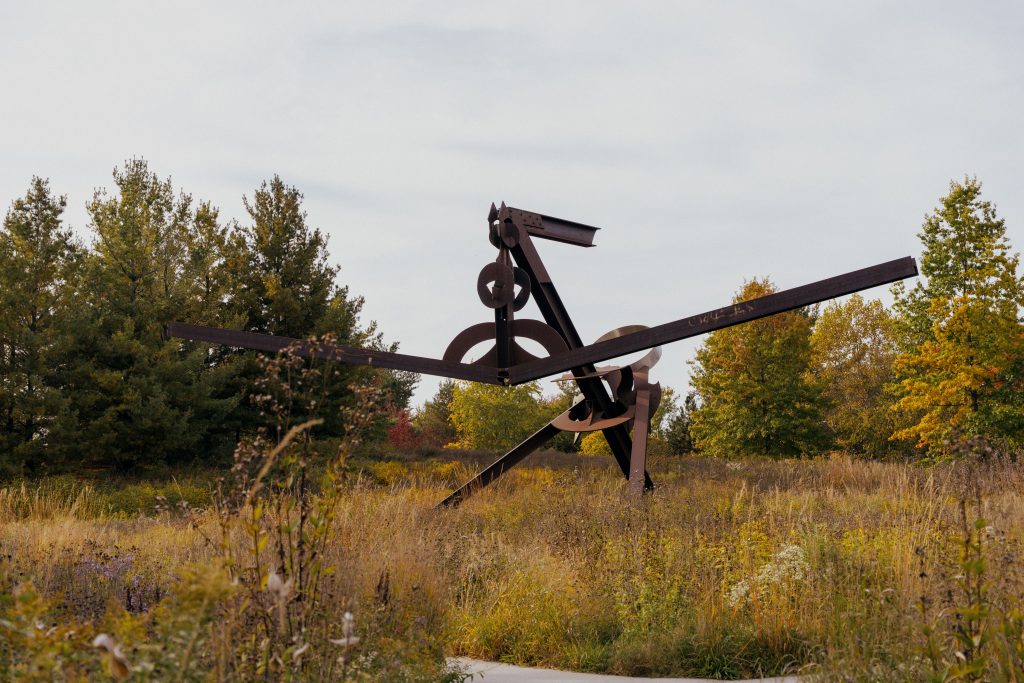
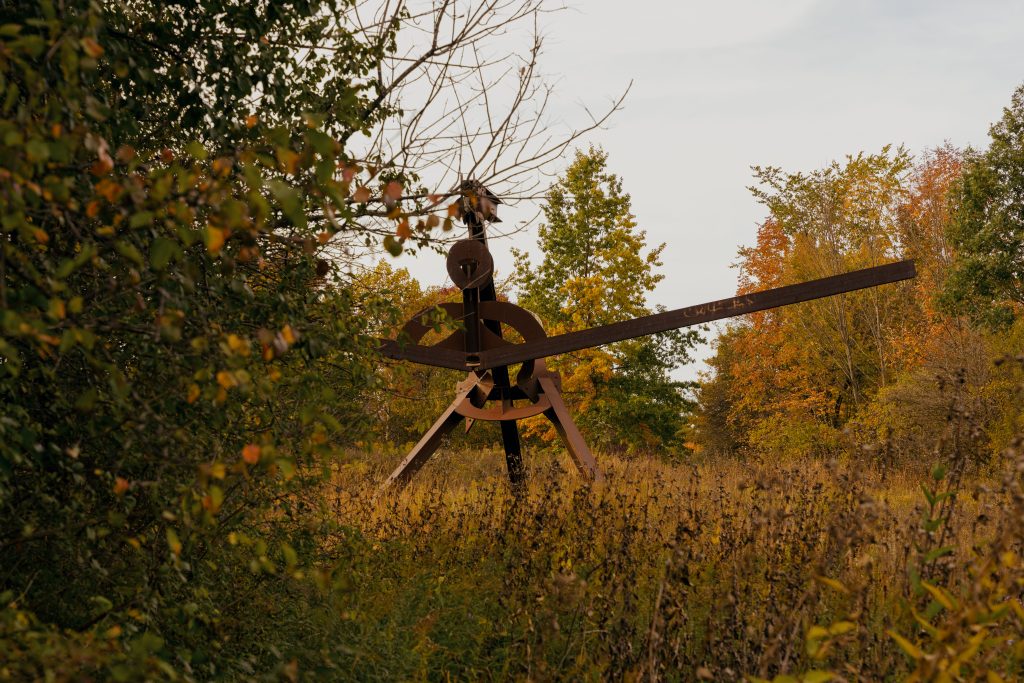
Mark di Suvero‘s Scarlatti occupies the Doehne Wildflower Meadow with an equally commanding presence, though its material language is more restrained.
Constructed from steel between 1994 and 2000, the sculpture spans approximately 60 feet.
Long I-beams extend outward from a central arrangement of diagonals, circular elements, and structural connections. The composition recalls the vocabulary of bridges, cranes, and industrial construction, yet the components are freed from their conventional engineering purpose.
The title honors the Italian composer Domenico Scarlatti, and the work contains a suspended V-shaped element designed to move with the wind.
This possibility of movement gives the sculpture an unusual relationship with the surrounding meadow.
Seen from a distance, its long horizontal members appear to stretch across the grasses. From another position, its central structure becomes more prominent, revealing a complex arrangement of overlapping steel elements.
In a third photograph, the sculpture is partially concealed by vegetation. The change in viewpoint transforms the work from a monumental object into something discovered gradually within the landscape.
The three photographs demonstrate how the experience of sculpture is shaped not only by the object itself, but by the position from which it is viewed.
The Human Figure, Memory, and Material
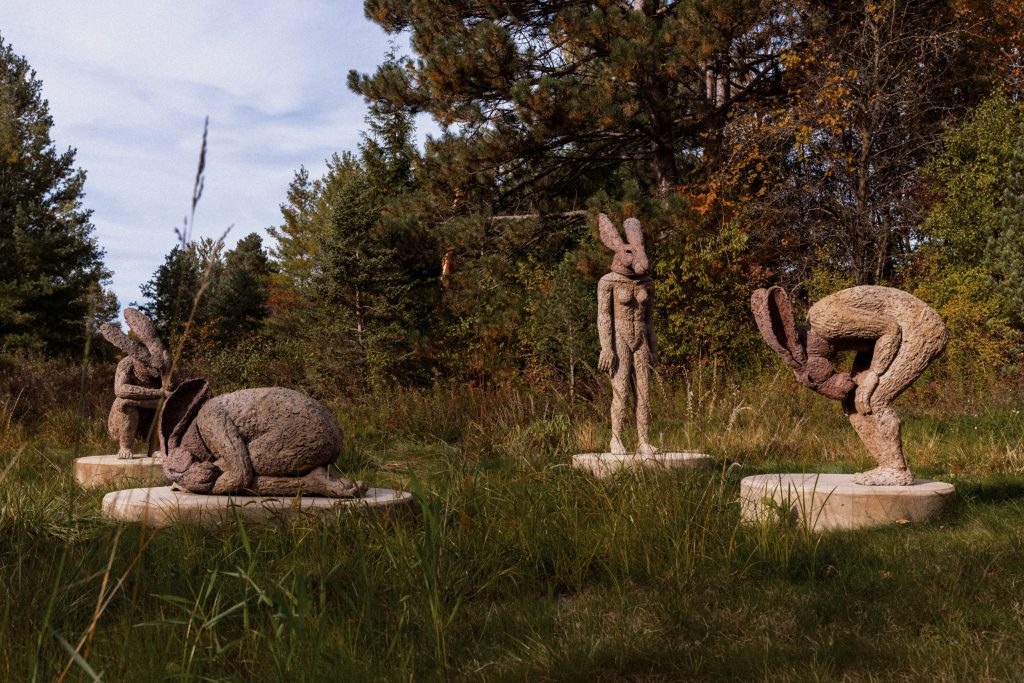
Sophie Ryder’s Introspective
Not every sculpture at Meijer Gardens relies on monumental scale or abstraction.
Sophie Ryder‘s Introspective presents a group of four bronze figures combining human and hare-like characteristics.
Created in 2005, the work was conceived in response to the September 11 attacks and explores themes of grief, vulnerability, and human connection.
The figures occupy different positions, suggesting individual responses to a shared experience. Their expressive forms invite viewers to move around the group and consider the relationships between them.
Set among vegetation, the bronze figures appear both fantastical and strangely familiar.
The surrounding landscape contributes to the sculpture’s atmosphere. Grasses and trees establish a quiet setting that contrasts with the emotional complexity of the figures.
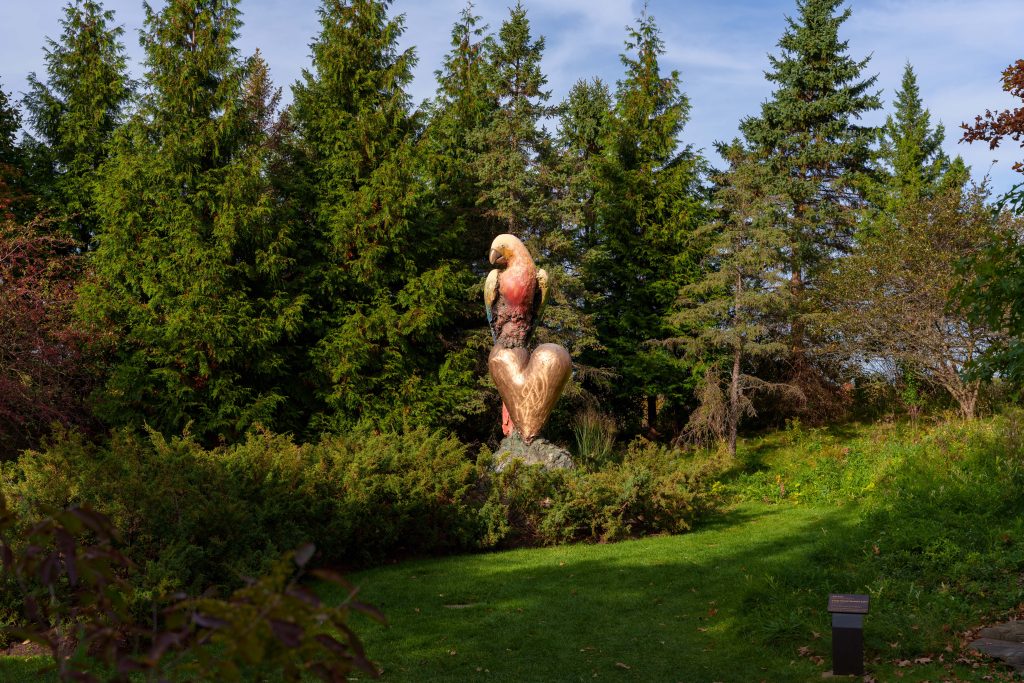
Jim Dine’s Large Parrot Screams Color
Jim Dine‘s Large Parrot Screams Color brings a more playful visual character to the Sculpture Park.
Created in 2007, the bronze sculpture depicts a large parrot perched above a heart-shaped form, combining two recognizable motifs within the artist’s work.
The bird’s colorful surface contrasts with the more subdued metallic tones of the heart below.
Surrounded by tall conifers and dense planting, the sculpture occupies a relatively intimate landscape setting despite its considerable size.
The vertical arrangement emphasizes the bird’s elevated position, while the heart introduces a contrasting rounded form.
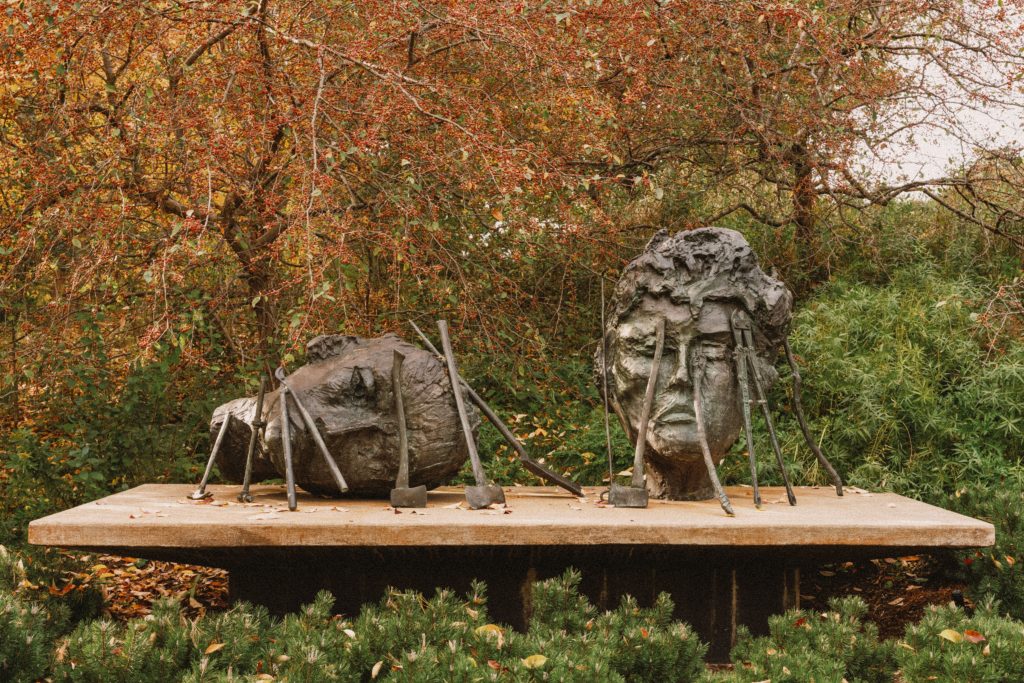
Jim Dine’s Tools in Their Places
Dine’s Tools in Their Places offers a more introspective treatment of familiar objects.
Created in 1984, the bronze work incorporates enlarged tools arranged around two roughly modeled head-like forms.
Tools are a recurring subject in Dine’s practice, carrying personal associations with craftsmanship, labor, and the act of making.
In this sculpture, everyday implements become part of a figurative composition.
The rods, handles, and tool heads introduce a linear vocabulary that contrasts with the irregular, heavily textured forms they surround.
Installed on a low platform amid trees and vegetation, the work encourages close examination of its surfaces and details.
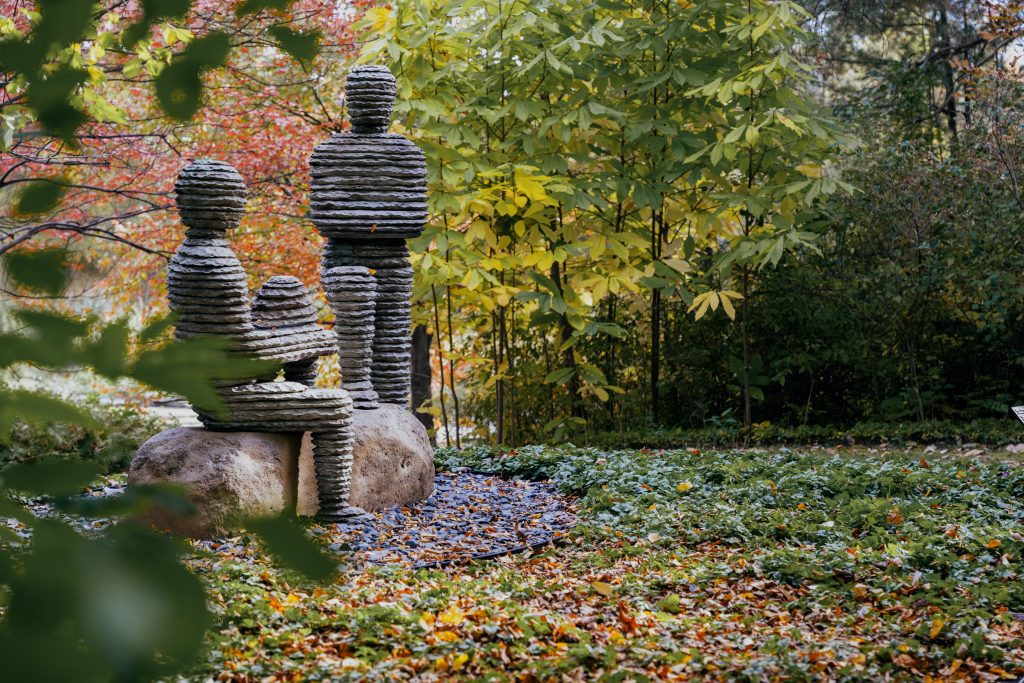
Boaz Vaadia’s Yizhaq & Eli’av
Boaz Vaadia‘s Yizhaq & Eli’av returns the discussion to the relationship between human form and natural material.
Completed in 2005, the sculpture depicts a group of figures constructed through repeated horizontal layers.
Although the finished work incorporates bronze, boulder, and bluestone, its appearance preserves the visual language of stacked stone that defined Vaadia’s sculptural practice.
The figures seem to have emerged through a process of accumulation rather than conventional modeling.
Their bodies resemble sedimentary formations, with individual layers creating the contours of heads, shoulders, and limbs.
Placed among trees and low vegetation, the sculpture appears closely connected to the geological character of its materials.
The surrounding autumn leaves reinforce the relationship between the permanence of the sculpted figures and the changing natural environment.
Where Architecture and Landscape Meet
Taken together, these works reveal a consistent principle throughout Frederik Meijer Gardens: the surrounding environment is not simply a backdrop for art.
It is an active part of how the art is experienced.
Within the Welcome Center, marble sculpture and architecture become inseparable. In the Japanese Garden, water, stone, and vegetation determine how buildings and artworks are revealed. Across the Sculpture Park, industrial steel, cast iron, copper, and bronze establish relationships with living materials that change throughout the year.
Autumn makes those relationships particularly visible.
A brightly painted steel sculpture appears more saturated against fading grasses. Weathered metal takes on new warmth beside gold and orange foliage. Still water reflects a landscape that will look entirely different a few weeks later.
The photographs also demonstrate the importance of perspective.
A sculpture seen from a distance may read as a single monumental gesture. Viewed more closely, its construction, material, and surface become apparent. Seen through trees or grasses, the same work takes on an entirely different character.
Architecture operates in much the same way. A building can be understood as a complete object, but its most revealing moments are often found in the smaller relationships between materials, light, openings, and the landscape beyond.
At Frederik Meijer Gardens, these relationships are not incidental. They are central to the experience.
The lasting impression is not simply of an impressive collection of buildings and sculptures, but of a place where architecture, art, and landscape continually reshape one another.
Photography by Focus Nest Media. All photographs captured at Frederik Meijer Gardens & Sculpture Park, Grand Rapids, Michigan.
